
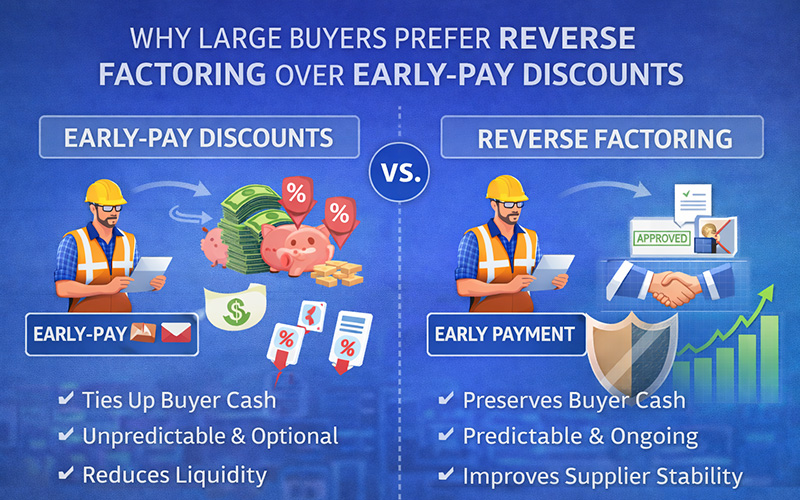
For many years, early-pay discounts were the primary method large buyers used to support suppliers. In exchange for paying invoices early, buyers received a small discount—often 1% or 2%. While effective in certain situations, early-pay discounts require buyers to deploy their own cash, reducing liquidity and limiting financial flexibility.
Reverse factoring offers a more efficient and scalable alternative.
Instead of paying early with internal funds, buyers leverage a factor’s balance sheet to provide early payment to suppliers. Suppliers still receive fast access to cash, but buyers retain their cash until the original due date. This distinction has become increasingly important in an environment of rising interest rates, tighter credit conditions, and heightened focus on cash preservation.
Reverse factoring also delivers greater consistency. Early-pay discounts are often optional, unpredictable, and dependent on buyer cash availability. Reverse factoring creates a structured, ongoing program that suppliers can rely on month after month. This predictability improves supplier planning, reduces financial stress, and strengthens long-term relationships.
In addition, reverse factoring enhances buyer leverage. Buyers offering supply chain finance programs are often viewed as preferred customers. Suppliers may offer better pricing, improved service levels, or prioritized production in exchange for access to affordable, reliable liquidity.
From a risk-management perspective, reverse factoring helps buyers prevent supply chain disruptions caused by supplier cash shortages. Rather than reacting to financial distress after it occurs, buyers proactively support supplier stability.
For large organizations focused on resilience, efficiency, and long-term value creation, reverse factoring has become the preferred alternative to early-pay discounts—aligning financial strategy with operational strength.