
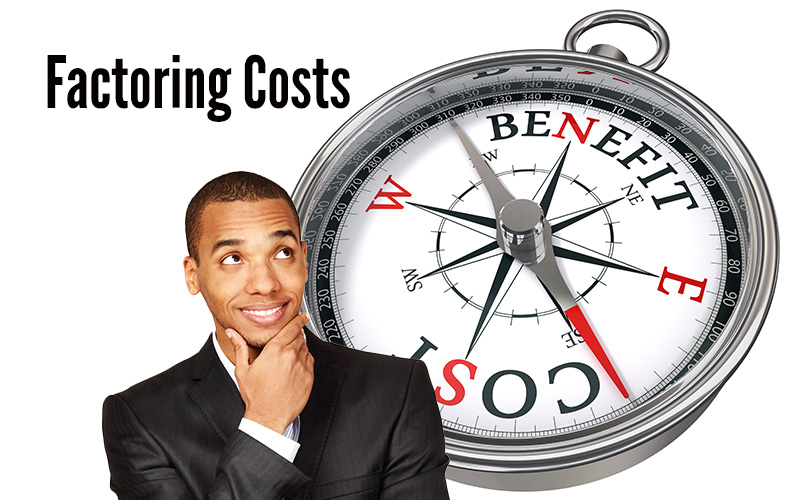
When business owners first explore traditional factoring, cost is often the first question—and sometimes the biggest hesitation. Factoring fees can appear higher than bank loan interest rates at first glance, but this comparison misses the fundamental nature of what factoring actually is. Factoring is not a loan, does not create debt, and does not rely on the business owner’s personal credit or balance sheet. Instead, it is a purchase-and-sale transaction where invoices are converted into immediate working capital.
Factoring costs are typically calculated based on the time it takes a customer to pay and the customer’s credit quality. Faster-paying customers generally result in lower overall fees. Unlike traditional loans with fixed monthly payments, compounding interest, and long-term obligations, factoring is transactional and flexible. Businesses only pay for capital when invoices are factored, and costs stop when the invoices are paid.
It is also important to compare factoring to the real alternatives businesses use when cash flow is tight. Late payroll penalties, missed supplier discounts, lost contracts, production slowdowns, emergency borrowing, or merchant cash advances often cost far more than a factoring fee. Factoring eliminates the opportunity cost of waiting 30, 60, or even 90 days for payment—time during which businesses must still operate, pay employees, and cover expenses.
Many companies discover that factoring is not just affordable—it is cost-effective. By stabilizing cash flow, businesses gain predictability, avoid financial stress, and unlock growth opportunities that would otherwise remain out of reach. When viewed in context, the cost of factoring is often best understood as the price of speed, flexibility, and financial control.